
Driveway Sealing in Des Moines and Ames: When to Plan
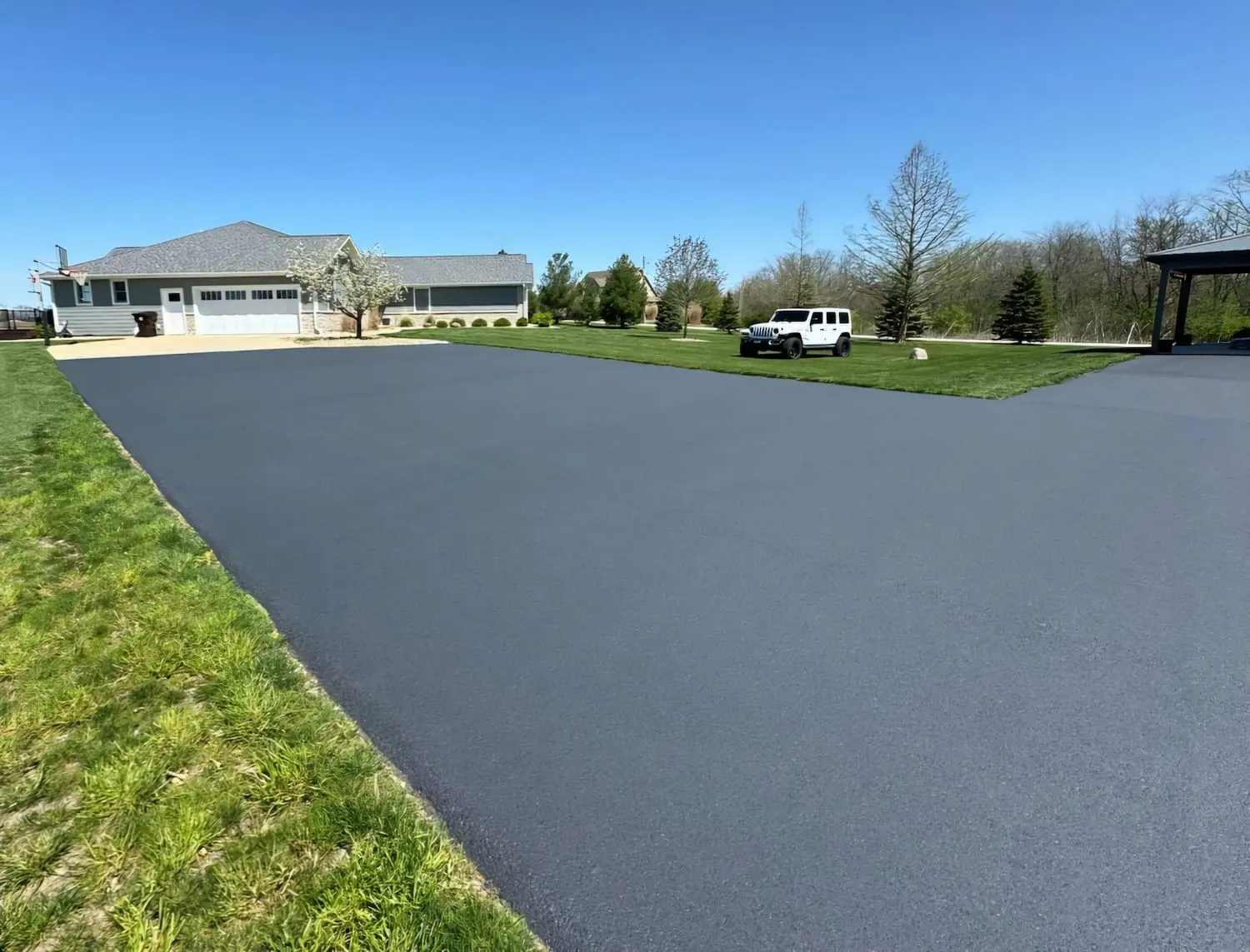
For driveway sealing in Des Moines, plan the work for a warm, dry stretch, usually somewhere between May and September, and use November and December to inspect the driveway and line up a schedule. A seal coat is a thin protective layer over sound asphalt. It slows weathering, but it does not repair a driveway that is already breaking down. If you have an asphalt drive in Des Moines or Ames, the first job is deciding which kind of help it needs.
What driveway seal coating can and cannot do
Asphalt is stone held together by a sticky petroleum binder. Sun, water and road salt wear that binder away over time, and the surface turns gray, dry and rough. A seal coat puts a fresh protective film over the top, which helps shed water and cuts down on surface wear.
It works on the surface only. If the base (the compacted stone under the asphalt) has failed, a seal coat will not hold it up. The coating will cover hairline cracks, but it will not close a crack wide enough to catch a pencil, and it will not fill a pothole.
| Driveway condition | Seal coat helps? | Better next step |
|---|---|---|
| Faded, gray surface with light wear | Yes | Seal coat in a warm, dry window |
| Hairline cracks only | Often, after cracks are cleaned and filled | Crack filling, then seal coat |
| Wide, open cracks | No, not on its own | Repair first, then decide on sealing |
| Potholes or sunken spots | No | Patch or repair the base |
| Alligator cracking (a web of small cracks) | No | Resurfacing or new paving |
Choose a warm, dry application window
Seal coat cures by drying, so it needs both warmth and dry weather. Many crews want air temperatures well above freezing and climbing through the day, and pavement that is completely dry. Damp asphalt, a morning dew that has not burned off, or rain in the forecast can ruin the bond or wash out fresh coating.
Why cold and damp cause trouble
In cool, humid weather the coating dries slowly and can stay soft or cure unevenly. A cold night right after application is a risk too. That is why a job that looks fine on the calendar can still get pushed back a few days.
Treat cure time as a range
Most crews ask you to stay off a fresh seal coat for about 24 to 48 hours, sometimes longer. Heat and sun shorten that wait. Cloud, humidity and cooler air stretch it. Your crew will tell you when the surface is ready based on the weather that week, so avoid planning a driveway party or a delivery for the day after the work.
Plan around Iowa weather in Des Moines and Ames
Central Iowa winters usually mean snow and repeated swings across the freezing mark. Any water sitting in a crack turns to ice, takes up more room than liquid and widens the gap. Sealing and crack repair done ahead of the cold protect the driveway, and a drive with open cracks is a poor candidate for waiting.
By November, overnight lows across the region commonly dip below freezing, and the warm, dry days a seal coat needs get scarce. Treat November and December as the months to look, plan and book, not to coat. Walk the driveway after the leaves are down, note what you see, and get on the schedule for spring.
Spring and early fall can both work, but build the plan around the weather, not a date. A dry, mild run of days in May or in September beats a fixed Saturday on the calendar. If your driveway sits in shade under trees or stays damp after rain, ask about extra drying time.
- Winter: inspect, photograph problem spots and decide what to repair.
- Spring: book once the ground has thawed and daytime temperatures hold up.
- Summer and early fall: coat during a dry forecast with several clear days.
Check the driveway and decide what to do next
Start with a slow walk from the street to the garage. Look for these signs:
- Surface wear, such as loose stone, a rough texture or heavy fading.
- Open cracks, especially any wider than a hairline.
- Potholes, soft spots or edges that are crumbling.
- Places where water sits after rain, since standing water breaks down asphalt faster.
If the surface is worn but solid, seal coating is probably the right call. If you see deep cracking, sunken areas or a lot of patching, you may be past sealing and into repair or driveway paving. For older homes or a full redo, our residential paving work covers that decision.
Before you ask for an estimate, jot down the driveway condition, roughly how big it is and when you would like the work done. That helps us tell you whether you need a seal coat, a repair or new asphalt before picking a date. We offer free estimates, so the first step costs you nothing.
Common questions
When is the best time to sealcoat an asphalt driveway in Iowa?
Most seal coating happens in a warm, dry stretch between about May and September. Pick the application day by the forecast, with dry pavement and several clear days, instead of a fixed date.
Can I seal coat my driveway in November or December?
Usually not. Cold nights and damp conditions keep the coating from curing well, so those months are better for inspecting the driveway and booking work for spring.
Will seal coating fix cracks and potholes in my driveway?
No. It protects the surface, but wide cracks and potholes need repair first, and a failing base may call for resurfacing or new paving.
Areas we serve
Our services
Have a question about your project? Call (515) 337-2096