
Caring for Your New Driveway in Iowa
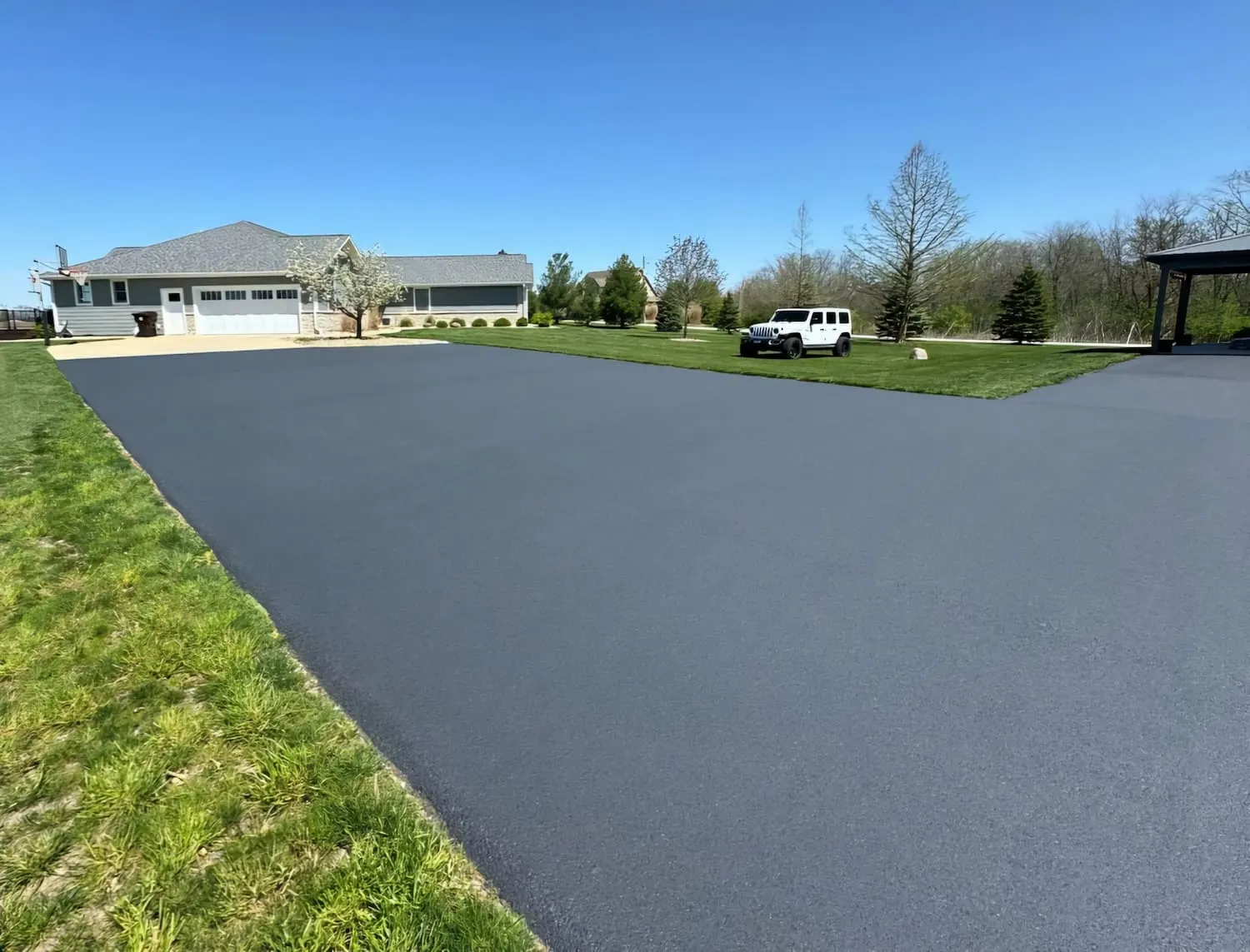
To care for a new asphalt driveway in Iowa, keep every vehicle off it until the paving crew says it is ready, then go easy on it for the first few weeks. Most crews ask for a wait of about 24 to 48 hours before driving, but that is a typical range, not a promise. Weather and site conditions can shorten or stretch it.
Wait before driving or parking
New asphalt is a mix of crushed stone and binder (the sticky asphalt cement that holds the stone together). It goes down hot and firms up as it cools. Until it has cooled and stiffened, the surface can be marked or pushed out of shape by weight.
Ask the crew that laid your driveway paving how the mix, the thickness and the weather affect access timing. Their access time is the one to follow. If a neighbor says they drove on theirs after a day, that tells you little about yours.
- Keep cars and light trucks off until the crew gives the go-ahead.
- Keep heavy vehicles, such as delivery trucks, trailers and concrete or dumpster trucks, off longer. Ask the crew for a separate answer on those.
- Do not leave a vehicle parked in one spot for long stretches during the first days of use.
- Block the entrance with cones or a sawhorse if family members or visitors might pull in without thinking.
Protect the asphalt during early use
Once you are cleared to drive, the surface is usable but still firming. Twisting force, as well as vehicle weight, can damage the surface.
Avoid turning the wheel while stopped
Turning the steering wheel while the vehicle is not moving grinds the tire against the asphalt and can scuff or tear the surface. Roll a little as you turn, and straighten out before you stop. Back out in a wide, gentle arc instead of cranking the wheel at the garage door.
Limit heavy loads and sharp turns
Loaded trucks, trailers and equipment put a lot of weight on a small footprint. Sharp turns with that weight can leave gouges. If you have a boat, camper or skid steer to park, ask the crew when it is safe to bring it onto the new surface and where to place it.
Watch for marks and ask early
Small indentations from a kickstand, a jack stand, a ladder foot or a sharp heel can show up in the first weeks. Avoid setting anything narrow and heavy on the surface. If you see new marks or ruts, take a note of where they are and call the crew. Do not try to rake, patch or smooth them yourself.
Account for Iowa fall weather
Iowa autumns typically turn colder as October moves into November, and freezing nights become more likely as winter approaches. Cooler air and ground pull heat out of fresh asphalt in a different way than a warm August day does. The calendar alone does not set a safe access time, so rely on the crew's read of the conditions at your property.
That applies across the metro. Homeowners may encounter swings from mild days to cold nights in the late season. If you are in Des Moines, West Des Moines, Altoona or Ankeny, ask about access timing. Requests around Des Moines have leaned heavily toward driveways.
A few conditions can change your wait:
- A shaded drive that gets little sun may behave differently from one open to the south, so ask how shade affects your timing.
- Rain soon after paving can affect how you manage the edges and the access plan.
- A drive that climbs to the street may need extra care where tires turn and brake.
- If your driveway edges rest on soft ground, such as wet lawn or clay, keep tires from riding the edge until the crew says it is fine.
Check access plans before regular use
Before the crew packs up, get a clear answer to a few questions. It may take a little time, and it may help prevent early damage.
- When can cars use the driveway, and when can I park on it?
- When can trailers, campers and heavier vehicles use it?
- How would rain or a cold snap change that timing at my property?
- What should I avoid in the first weeks, and who do I call if I see marks?
Write the answers down or ask for them in a text. If you are comparing options for asphalt paving or planning residential paving across more than one area of your property, ask the same questions for each section, since a drive, a pad and a turnaround may be laid at different times.
Keep an eye on the edges
Asphalt edges can be vulnerable to damage where they lack support. Keep tires off the edge, especially while the asphalt is still firming. Backfilling along the edge with soil, where the crew recommends it, can help support it and reduce breakage. Ask the crew whether that is part of the job or something for you to handle once the surface has set.
Keep lawn trimmers, snow shovels with metal edges and plow blades in mind as well. Iowa winters can mean a lot of snow removal, and a first winter on new asphalt goes better if whoever clears the drive knows to keep the blade slightly raised and avoid scraping hard against the surface.
If you would like a crew to look at your driveway plans and talk through timing for your property, we offer free estimates.
Common questions
How long before driving on new asphalt?
A typical wait is 24 to 48 hours, though weather and site conditions can change that timing. Your paving crew gives the real answer for your driveway, and heavier vehicles usually wait longer than cars.
When can I park on a new asphalt driveway?
Ask the crew when parking is fine, since it is often a separate answer from driving. Even after you are cleared, avoid parking in the same spot for days at a time and keep kickstands and jack stands off the surface in the first weeks.
Does Iowa weather change new asphalt driveway care?
It can. October and November often bring cooler days and colder nights, which can change how quickly asphalt firms up. Ask the crew how rain or a cold snap could change the access timing at your property.
Areas we serve
Our services
Have a question about your project? Call (515) 337-2096